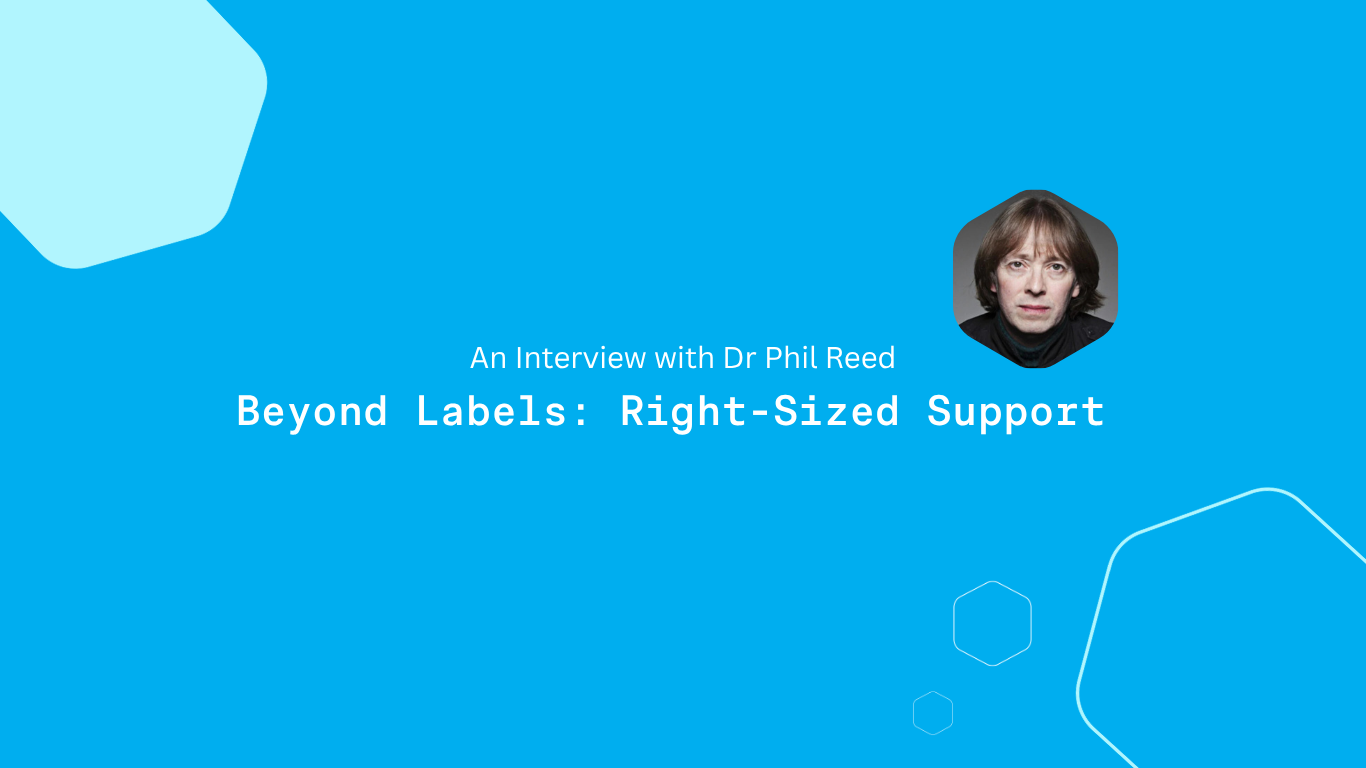
For children whose needs involve SEND, previous adversity, instability and behavioural or emotional difficulties, the right support is unlikely to be found through a single intervention. These needs can interact with the environments around them, raising important questions about what commissioners and providers need to understand before they determine an appropriate package of support.
In a conversation with Professor Phil Reed, Professor of Psychology and expert in behaviour, autism, and learning at Swansea University, one idea repeatedly came to the surface: the importance of creating safety and stability around a child and what this means in practice.
“The only need for care is to provide a safe, stable environment,” Phil argues.
Phil’s proposition is deliberately forthright. Yet it provides an interesting starting point for wider questions: should therapeutic care be understood as a specialist intervention, or should some of its underlying principles form part of what we consider good care?
Beyond Behaviour
Behaviour is often one of the clearest indications that a child needs additional support. A young person may struggle to regulate their emotions, withdraw, display behaviours that create concern, or find it difficult to engage with education. However, behaviour rarely occurs in isolation. Phil urges us to look at the impact of adverse childhood experiences as a key factor affecting young people’s emotional and neurological development.
“All of those experiences we know profoundly impact neurological development,” Phil explains.
The picture is even more complex when SEND is included. Phil describes the relationship between additional educational needs and children’s wider circumstances of children as bi-directional.
“They are clearly interacting, they are bi-directional, and both will have an impact on the other.”
Experiences outside of education can influence children’s ability to learn and engage in school. Difficulties in education can also place pressure on the child and those around them.
For children’s social care, the key point is that identifying a single explanation may not always be possible or helpful. Behaviour can reflect SEND, prior adversity, the environment they are currently in, communication difficulties or a combination of these factors. Phil Reed suggests asking what the behaviour communicates about the child’s needs.
What Is Therapeutic Care?
The term “therapeutic” is used in several ways. It can refer to access to clinical or therapeutic interventions, a philosophy of care, or an environment informed by an understanding of trauma, needs, and behaviour. Each meaning describes a distinct aspect of care. Specialist intervention remains essential where it is required.
“You cannot develop neurologically until you are safe,” Phil states.
His emphasis on safety and stability invites us to consider the relationship between these foundations and the care a child receives. The everyday experience of care can be a critical part of what makes that care therapeutic. This includes the consistency of relationships, the predictability of care, and the way adults respond when a child becomes distressed.
The stability of education alongside placements is also critical, and how changes are introduced and managed. A core measure of care and support being right-sized is whether the young person feels sufficiently secure to develop relationships, confidence, and further independence.
None of this omits the need for specific therapeutic interventions where appropriate. However, equally, intervention does not exist independently of the environment in which prompts the need. Phil’s insight prompts us to ask not only whether therapeutic support is available, but whether the wider conditions around the young person support the work of an intervention.
Understanding Complexity
Terms frequently used in the sector, such as “complex needs”, can communicate the significance of a person’s support requirements. They can also encompass a wide range of individual circumstances.
Two individuals whose needs may appear similar on paper may have environmental requirements that are vastly different. Considering SEND in this can add in additional factors. Where there are difficulties with emotional regulation, communication, sensory processing, and learning, separating one thing from another can tell us less than understanding the combined impact that the young person experiences.
This is where a needs-led approach becomes important. It encourages us to move beyond broad descriptions of complexity and identify the young person’s specific needs, the environments required to support them, and the outcomes being pursued
For commissioners, this approach creates a clearer foundation from which to consider the appropriate provisions. Meanwhile for providers this generates an opportunity to articulate the ways in which their approach can respond to the child on an individual basis, rather than to a broad category of need.
A Shared Challenge
For Phil, both SEND and social care share a similar challenge that impacts stability in relationships, education, and later life experiences. “Both are challenged by stigma, which further impacts the intervention success for care or support.”
The wider outcomes of therapeutic care and support can often be hindered by the attached stigma.
“It can be multifaceted. There will be neurobiological components, educational components, and wider societal components in terms of stigmatisation, both for SEND and social care. This impacts how people see the person, how they see themselves, and therefore how they will react in certain situations, which will feed into the success of care or educational support.”
Phil Reed highlights an important issue for the care sector. While we can control the support provisions provided to those who need it, the stigma associated with receiving support can become an additional barrier for the young person.
Implications for Reform
Phil Reed argues that stigma has significant implications for care, therapeutic support, and wider reform. One relevant area is the aspiration to increase mainstream school placements for children with SEND.
“Every piece of research we have done, certainly within neurodivergence, suggests that mainstreaming is not the answer, regardless of how well-intentioned it is. It is always catastrophic for the individual involved. They have an increased risk of bullying, and mainstream schools are not proportionately set up to cater to the needs of those who have SEND or additional needs.”
Phil notes that the research typically shows that the individuals who benefit the most from more people with additional needs being in mainstream education are those who do not need the support. This gives those children and young people exposure to divergence and more interaction with SEND children. This may in turn reduce some of the stigma, but still not fully provide the full needs required to support the learning of the child who needs the support.
Starting from the End
From extensive research into young people with additional needs and behavioural and learning psychology, Phil argues for outcomes being the focus of the support provided. This is not just from the scope of individualised outcomes, but instead from the end goal of the support given.
The overall outcome for any young person in receipt of SEND support or social care is to have a fulfilling and secure transition into adulthood, to obtain secure accommodation, healthy relationships, and potentially regular employment. Phil suggests that to obtain this, working backwards from this objective to the young person at present can help to build the environment that will enable this future to be achievable.
The conversation with Phil Reed highlights the importance of reducing stigma and supporting a positive self-image for young people navigating neurodivergence and social care. For Phil Reed, this provides a critical starting point for reform across both sectors. It should sit alongside trauma-informed support and an understanding of how everyday care can create therapeutic conditions.
Optimising care depends on the connections between every aspect of a young person’s support. For the child, care is experienced as a whole: through their relationships, education, environment, therapeutic support, and daily routines. Right-sized support begins with understanding that complete lived experience and shaping services around it.
Professor Phil Reed, / Yr Athro Phil Reed,
Director of Health, Education, and Rights (HER) for Women Unit, Singleton Hospital, Swansea.
Professor Emeritus Psychology, Medicine, Health, and Life Science.
Tel.: 01792 602047. / Ffôn: 01792 602047.
Book / Llyfr: Interventions for Autism: Evidence for Educational and Clinical Practice
Psychology Today Blog: ‘Digital World, Real World’
Editor-in-Chief: Learning and Motivation